Google Gemini Is Reaching Younger Students. Are Schools Ready?
Google has expanded Gemini access to younger K–12 students. The bigger question for schools is not whether AI is available, but when students are ready to use it.
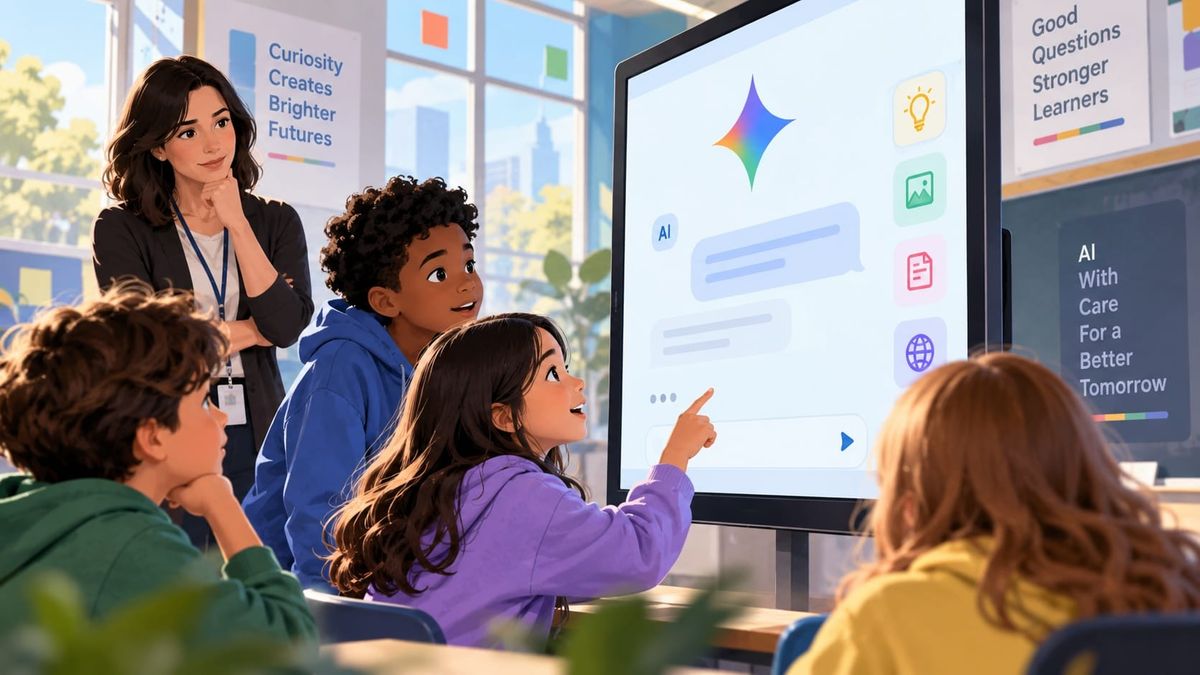
Generative AI is moving deeper into schools, and not always at the pace schools themselves choose.
In August, Google expanded access to Gemini for K–12 students of all ages in districts that had already enabled Gemini for students.
That means younger students can now use AI inside tools many schools already rely on.
The change raises a simple question:
Are schools ready for students of almost any age to have access to a general-purpose AI assistant?
What changed?
Until recently, access to Gemini through Google’s education products was much more limited for younger students.
Now, districts that already allow student access to Gemini can make it available to students under 18 as well.
Google has also added Gemini features directly into Google Classroom.
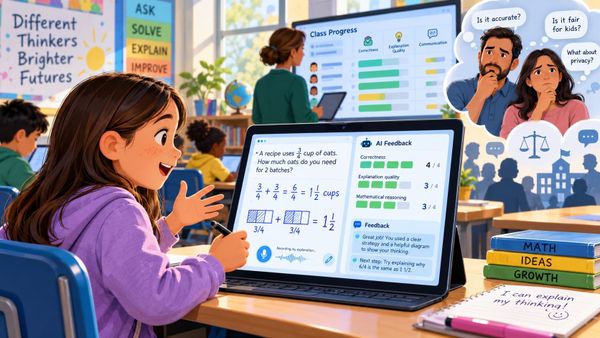
Depending on what a school enables, students can use AI to work with course materials, create practice quizzes and flashcards, build study guides, get help with writing or maths, and explore assignments through AI-generated prompts.
Importantly, schools still have control.
Administrators can disable Gemini, and districts that had already switched student access off did not suddenly have it turned on automatically.
Why some schools were caught by surprise
The technical change may be straightforward.
The policy questions are not.
Education Week reported that some school leaders only became aware of the expanded access shortly before students started using it.
That creates several problems at once.
What age is appropriate for independent AI use?
Should a 10-year-old use the same kind of chatbot as a 17-year-old?
How should teachers know when AI has helped with an assignment?
What should students understand about hallucinations, bias and privacy before they begin using these tools?
And perhaps most importantly:
What kind of learning should students still be expected to do without AI?
Age may not be the only question
It is tempting to solve the problem with a simple age limit.
But that may be too crude.
A student’s ability to evaluate an AI answer depends on much more than age.
Do they know enough about the subject to notice when the answer is wrong?
Can they distinguish a confident explanation from a reliable one?
Do they understand why an assignment asks them to write, calculate or explain something themselves?
AI literacy may therefore need to come before unrestricted AI access.
That means teaching students not just how to prompt a chatbot, but how to question it.
Schools now have another decision to make
The interesting part of Google's expansion is not really the technology.
It is how quickly AI is becoming part of the normal infrastructure of education.
Google Classroom is already used by schools around the world. When AI becomes another built-in feature, choosing whether to use it can start to feel very different from evaluating a completely new product.
That makes deliberate decisions even more important.
Schools may need to ask:
What do we want students to use AI for?
At what age?
Under what supervision?
And which parts of learning should remain deliberately AI-free?
Those questions are becoming harder to postpone.
Sources
Google Workspace Help: Control access to Google services by age