Should Schools Ban Phones for the Entire Day?
A new bipartisan U.S. bill would encourage full school-day cellphone bans. The evidence suggests stricter bans may work better, but removing phones does not automatically remove digital distraction.
The school-phone debate is getting bigger.
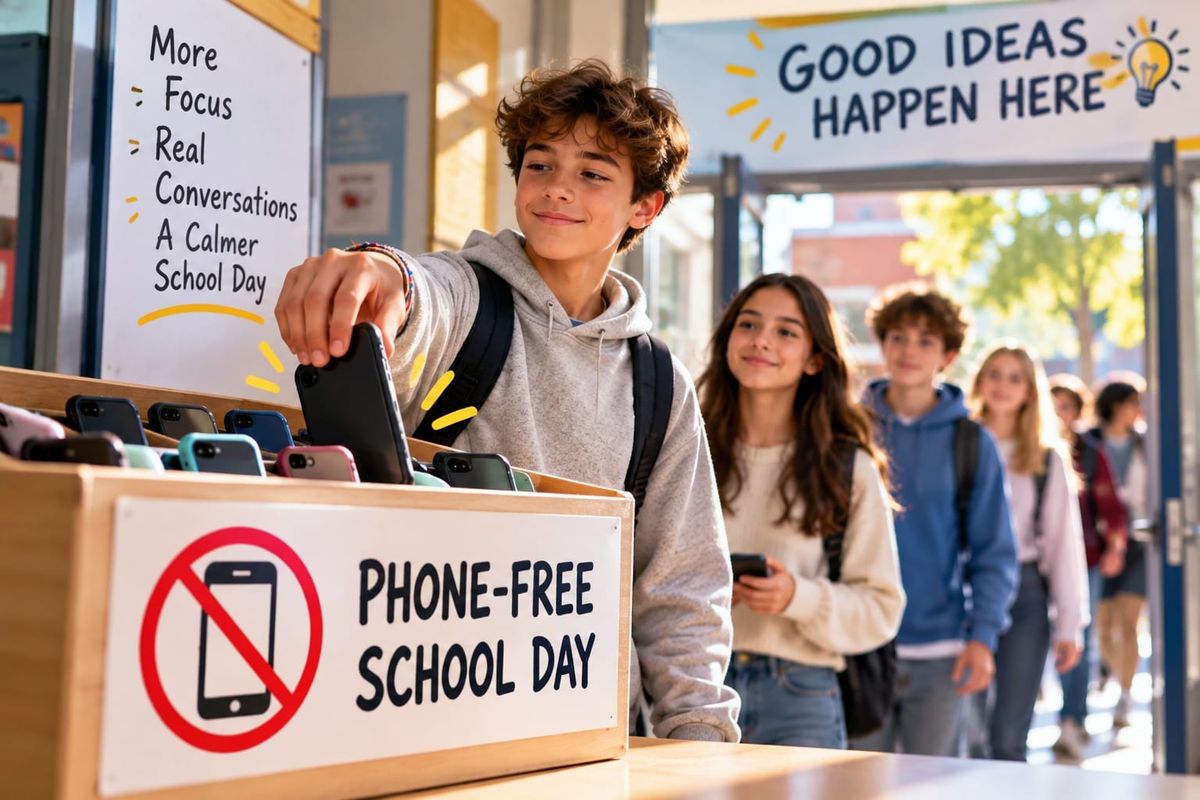
A new bipartisan bill introduced in the United States would encourage states to adopt full school-day cellphone bans for students.
The proposal would provide federal funding to states that introduce and enforce restrictions, including money for lockers, pouches and other storage systems.
The idea is simple:
If phones are distracting students, remove them from the school day entirely.
But the research is not quite that simple.
From classroom bans to “bell-to-bell” bans
Many schools already restrict phones during lessons.
Students may be allowed to keep them in bags, use them during lunch, or check them between classes.
The new proposal reflects a stronger model often called a bell-to-bell ban.
Phones are stored away from the beginning of the school day until the end.
That matters because partial restrictions still leave students repeatedly reconnecting with messages, notifications and social media throughout the day.
Supporters argue that a full-day ban creates a much clearer rule:
School time is phone-free.
Read the Washington Post report
Why schools are moving in this direction
The concerns are familiar.
Teachers report that phones can compete with:
- attention
- classroom discussion
- independent work
- face-to-face interaction
- sleep and well-being
Even when students are not actively using a phone, the expectation of messages and notifications can pull attention away from learning.
That has led a growing number of schools and states to adopt stricter policies.
But do phone bans actually improve learning?
The evidence is mixed.
Some studies have found improvements in student performance after schools introduced phone restrictions.
Others have found little or no measurable academic effect.
One reason may be that not all bans are equally strict.
A rule that says:
“Don’t use your phone during class.”
is very different from:
“Your phone is physically unavailable until the school day ends.”
The newer debate is therefore less about whether schools should have rules and more about how complete those rules need to be.
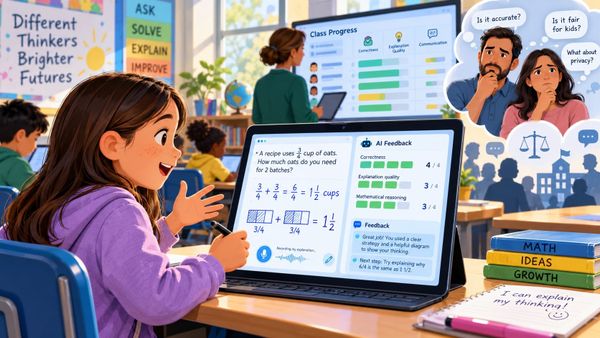
Students still have other screens
There is another complication.
Taking away phones does not create a screen-free school.
Many students still spend much of the day using:
- Chromebooks
- laptops
- tablets
- online learning platforms
A student who cannot open TikTok on a phone may still be able to switch tabs, message classmates or browse unrelated websites on a school device.
So a phone ban may solve one distraction without solving the broader problem of fragmented attention.
The policy has exceptions
The proposed legislation would allow exceptions for students who need phones because of:
- medical conditions
- disabilities
- special education requirements
That is important.
For some students, a phone is not primarily a distraction.
It may be an accessibility or health tool.
Any serious policy has to distinguish between unnecessary use and necessary access.
Why the full-day model is attractive
There is a practical advantage to simple rules.
Teachers do not need to negotiate phone use in every lesson.
Students do not need to wonder whether a particular teacher allows phones.
Parents know the expectation.
The whole school operates under one rule.
That consistency may matter as much as the technology itself.
But schools should measure what actually changes
A phone ban can easily become a symbolic policy.
The real question is what happens afterwards.
Do students:
- pay attention more consistently?
- talk to each other more?
- complete more work?
- report less stress?
- perform better academically?
- simply move the distraction to another device?
Those are measurable questions.
And schools implementing bans now have an opportunity to collect better evidence.
The bigger question
Phones clearly create problems in some classrooms.
But “ban the phone” is only one possible response to a larger issue:
How much competition for attention should schools allow during learning?
That question includes phones.
But it also includes notifications, laptops, messaging platforms and even educational software competing for students’ attention.
Removing the phone may help.
The more interesting question is what schools do with the attention they get back.
Source
The Washington Post: Bipartisan bill seeks to ban cellphones in schools nationwide